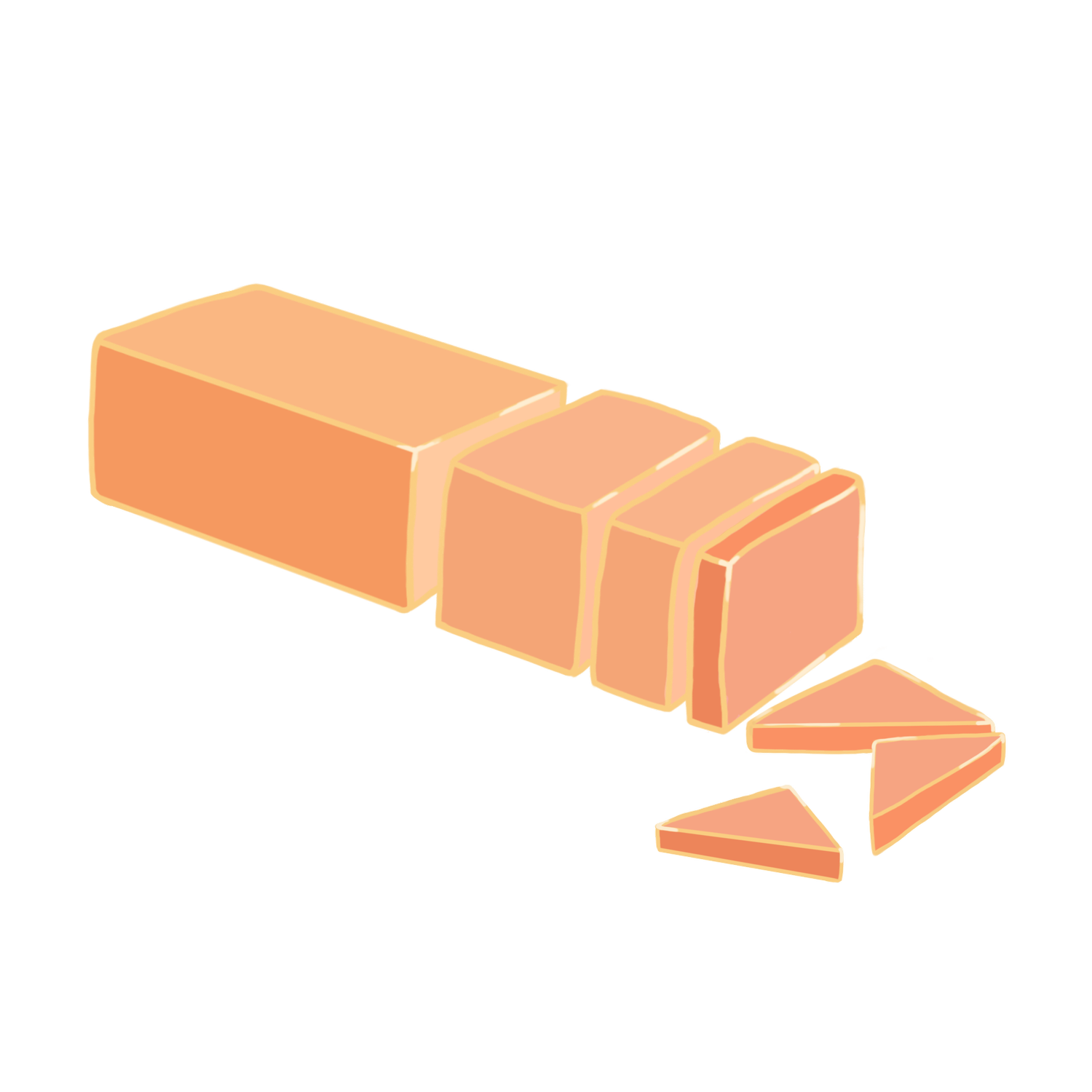
1,389 photos, 339 keepers
THE RUB
“Is this your job?” asked a runner’s father. I was taking pictures for a local trail race. I’m not sure what made me appear so official. I was carrying a basic point-and-shoot camera.
Maybe it was that I was carrying a camera at all instead of just using my phone. I’m no pro photographer, but I’ve adapted some principles to take a few decent pictures — for free.
Shoot from a low position to create a more heroic look.
Use a fast shutter speed to capture clear action.
And most importantly, continuous shooting and burst. The more images you capture, the more likely you are to stumble upon a decent shot.
I snapped 1,389 photos, and 339 were acceptable enough to share online — that’s a 24% hit rate which is also a 76% failure rate.
THE FRAMEWORK
Recently, we watched Charlie Chaplin's 1925 film, The Gold Rush. Near the end, the newly rich Tramp poses for a newspaper photographer — old-time picture-taking, all setup and ceremony, because you only got one shot to get it right. The evolution in picture-taking has since dropped the cost of a photo to practically nothing.
Where photographers once took careful aim, we now spray away. So I asked myself, “How do you know when to aim and when to spray?” Inherently, two costs drive the decision: the cost of the attempt and the cost of a miss.
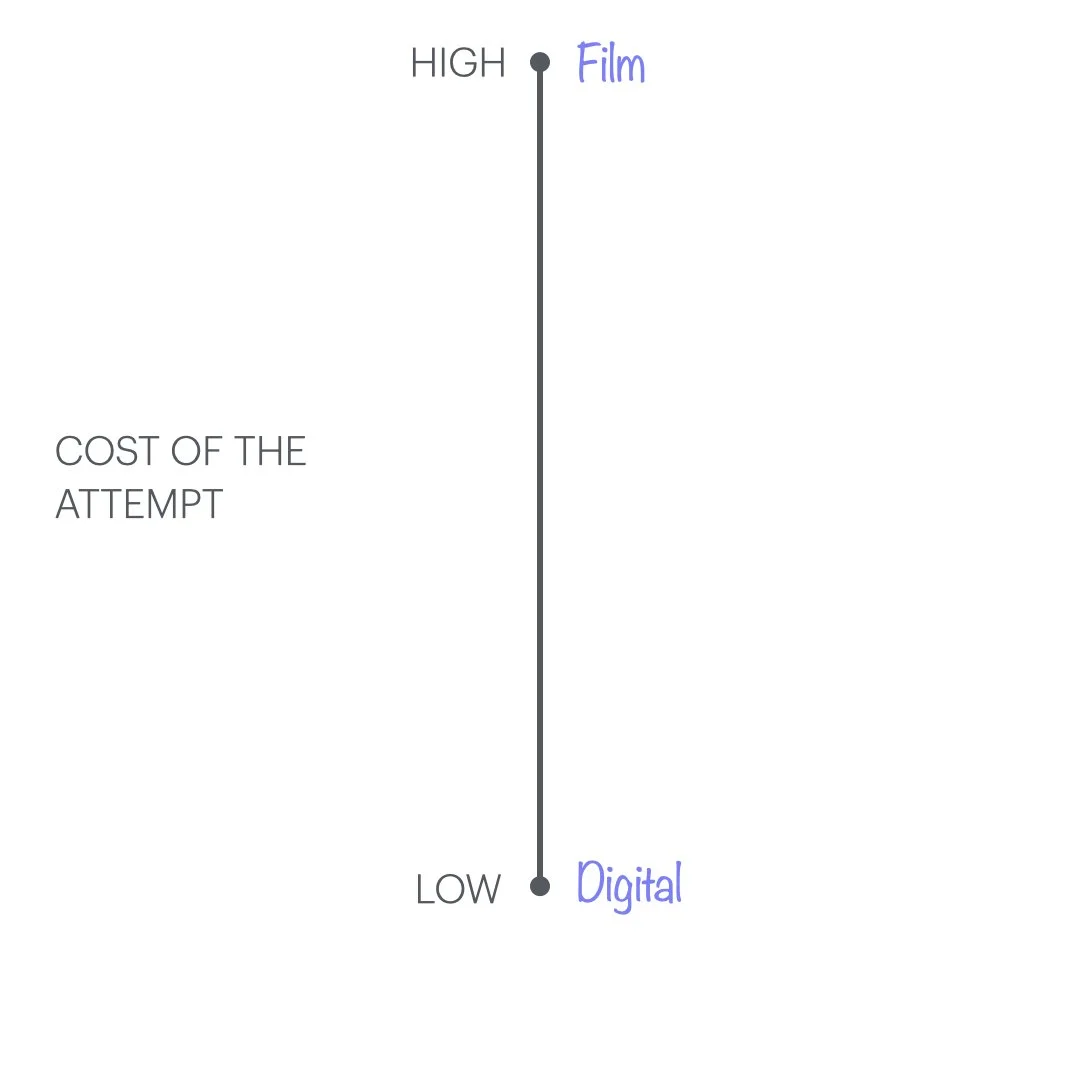
The cost of the attempt determines the options. Film was expensive, but digital is basically free. Breaking ground to open a new store is a major investment, but brainstorming more ideas for the whiteboard only costs 10 more minutes. Aim for the expensive attempts and spray for the cheap ones.
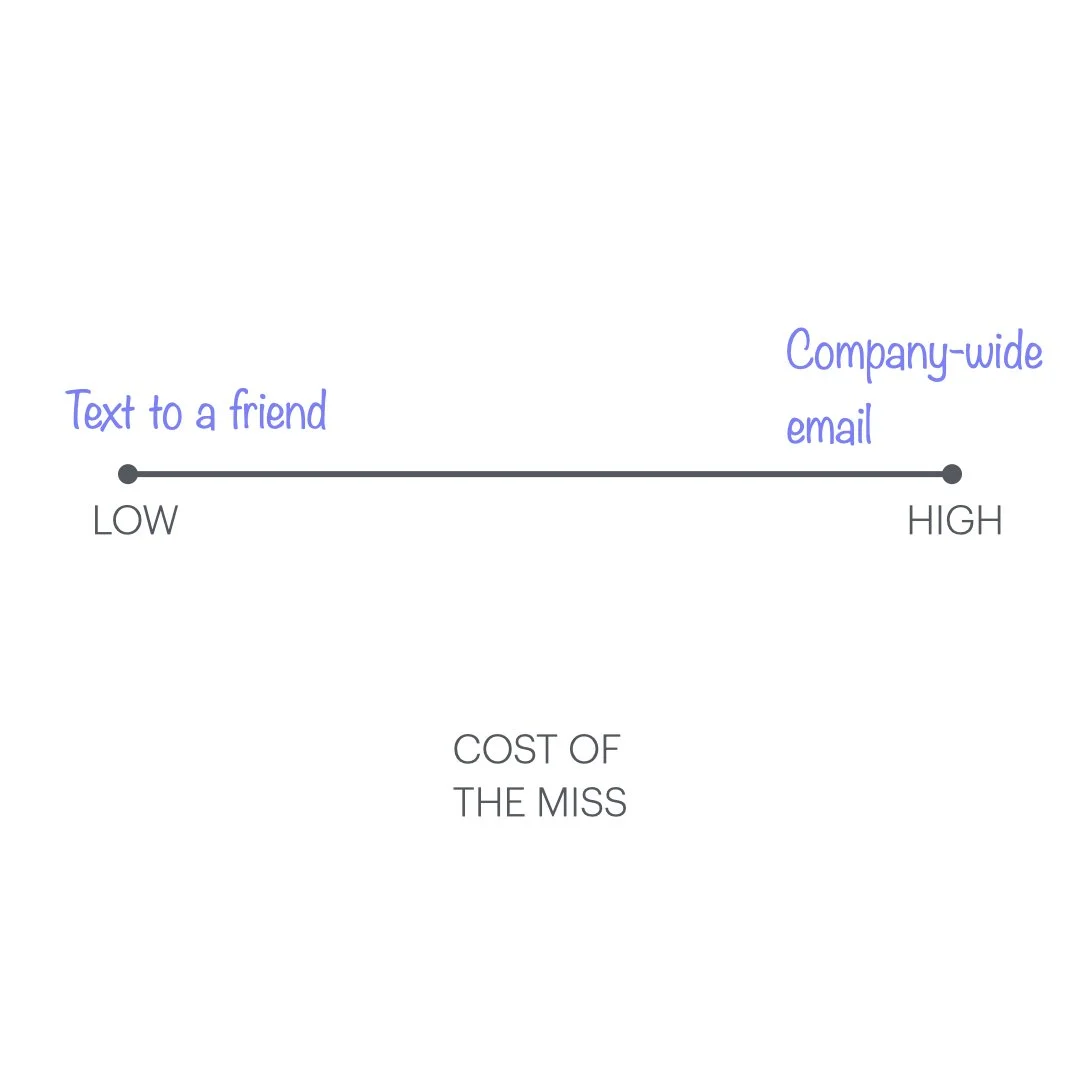
The cost of the misses measures regret and recovery. Developing prints on bad pictures was such a bummer and a waste of money; deleting accidental digital shots of my feet is no big whoop. A bad hire, a company-wide email, or a public launch all come with big-miss price tags; coffee with a new contact, a text to a friend, or a small-group beta are all easier to overcome.
2 x 2 grid time!
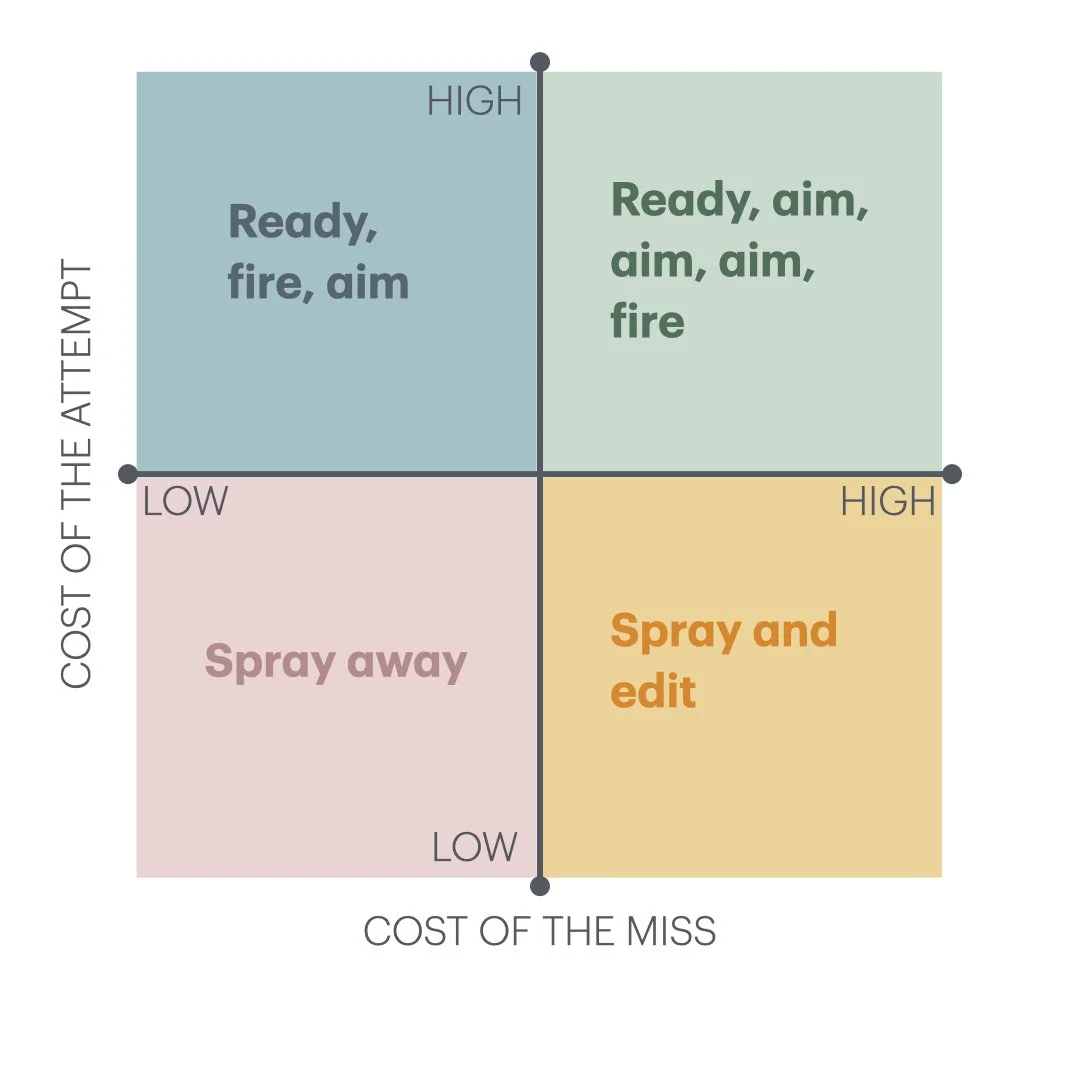
Both low? Spray away — no reason not to. Both high? Ready, aim, aim, aim, fire. The two mixed quadrants are where it gets interesting. Expensive to try but cheap to be wrong, you can commit and adjust in flight. Cheap to try but costly to be wrong — that's spray and edit: generate freely, then curate ruthlessly before anything ships. Which is exactly what I did with 1,389 photos.
THE PRACTICE
When I began drafting this topic, I assumed the lesson was going to lead me to identifying which projects are better suited for spraying and which are better for aiming. But as I continued to deconstruct this topic, a different lesson emerged.
I sprayed 1,389 frames during the race, but I applied some precision when I edited them down to 339. When I’m drafting a keynote speech, I brainstorm tons of ideas and research many stories. I’m developing and sourcing more content than I can use. When it’s time to deliver, I better have it polished because I have one shot to get it right.
The mode isn’t tied to the activity — it’s tied to the phase. Generation is high-volume; commitment is high-precision. My breakdowns tend to occur by over aiming. I’ll polish one LinkedIn post for three weeks when I should be spraying more. On the other side of breakdowns, are the cowboys who fire off 50 half-baked ideas and never curate with any filter. That’s just a lot of noise.
The spray-and-edit quadrant is where I do my best work — generate freely, then cut ruthlessly. The hidden skill was never the shooting. It's the selecting.
Film-to-digital collapsed the cost of taking a shot. AI is now collapsing the cost of making almost anything. When you can generate 100 drafts in a minute, the value shifts to judgment. The person who can pick the good one wins. The scarce resource flips from production to taste.