
Two questions to ask before delivering bad news
THE RUB
“Will your daughter be joining us on speakerphone?” asked the veterinarian. My wife and I were taking care of our daughter’s dog, Zuko, while she was vacationing in New Orleans.
Zuko has masticatory muscle myositis, which causes his immune system to attack the chewing muscles. That can make it painful for him to eat.
During his time with us, his steroid dosage was scheduled to be reduced by half. Two days later he stopped eating. After 24 hours, we took him to the emergency animal clinic. We decided not to tell our daughter until we had more information, so we told the vet, “No, our daughter will not be joining us on the phone.”
I’ve been frustrated in the past by my parents choosing not to share information about their own health, waiting to mention a surgery until after it’s completed.
I felt a little hypocritical about our decision, and that unease grew when we told our other kids, just because the vet trip scrambled plans with them that day.
Our intent was protective. There was nothing our daughter could do except worry. And worry is not a good emotion while you’re on a trip with friends.
THE FRAMEWORK
This scenario got me thinking about communicating bad news. What do you share, when do you share it, and how do you deliver it?
Two questions that guide the best path:
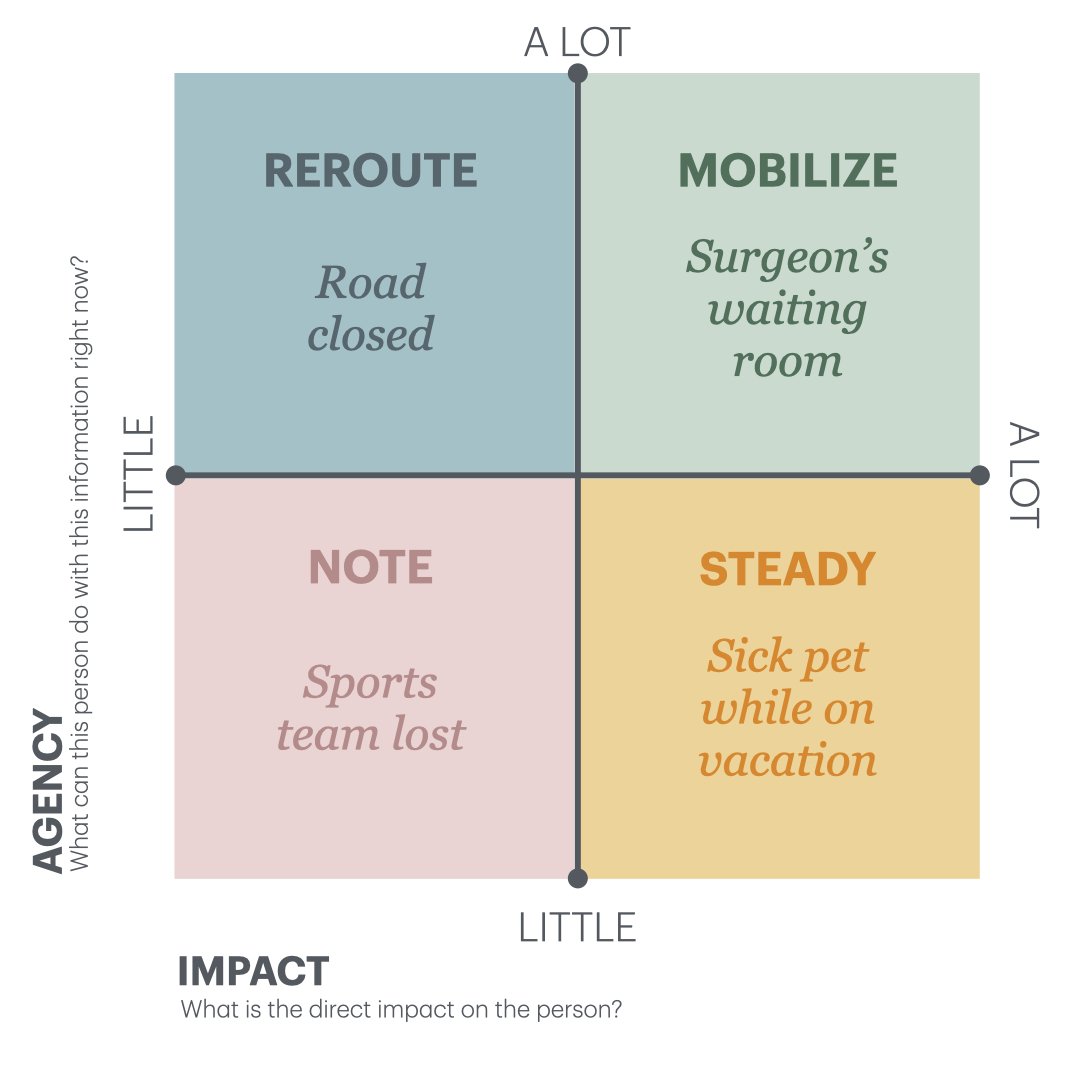
What can this person do with this information right now?
What is the direct impact on this person?
Two-by-two grid alert!
MOBILIZE — High agency, high impact. "Surgeon's waiting room." This person has real decisions to make: who to call, whether to get on a plane, what to ask the doctor. Tell them everything you know as soon as you know it, even when it's hard to say. Holding back here doesn't spare them any worry. It just adds distrust once they find out.
STEADY — Low agency, high impact. "Sick pet while on vacation." The news matters, but there's nothing they can do about it yet. Wait until you know enough that the update informs instead of alarms. Then deliver it yourself, gently, before they hear a scarier version from someone else.
REROUTE — High agency, low impact. "Road closed." An unexpected change to the schedule or the resources. It's annoying, but they can work around it. Give them the facts quickly. They don't need cushioning, and they don't want it.
NOTE — Low agency, low impact. "Sports team lost." Some fans would put this in the high-impact column. For most of us, it's disappointment and nothing more. A short heads-up is plenty.
THE PRACTICE
When I run my mom’s surgery through the two questions, it lands in a different quadrant than Zuko’s situation. If I had known prior to my mom’s surgery, I could have driven over, sat in the waiting room, helped with recovery, and asked the surgeon questions. They took away my agency. I assume my parents didn’t share because they didn’t want to be a bother.
Our daughter in New Orleans had no move to make. If Zuko had needed surgery, we would have called our daughter from the lobby. As it turned out, Zuko was just nauseous. The vet gave him some stomach meds and fluids. When we got home, we took a picture of Zuko and sent it to our daughter with the caption, “I had a little tummy ache, so I went to the vet and got some medicine.”